
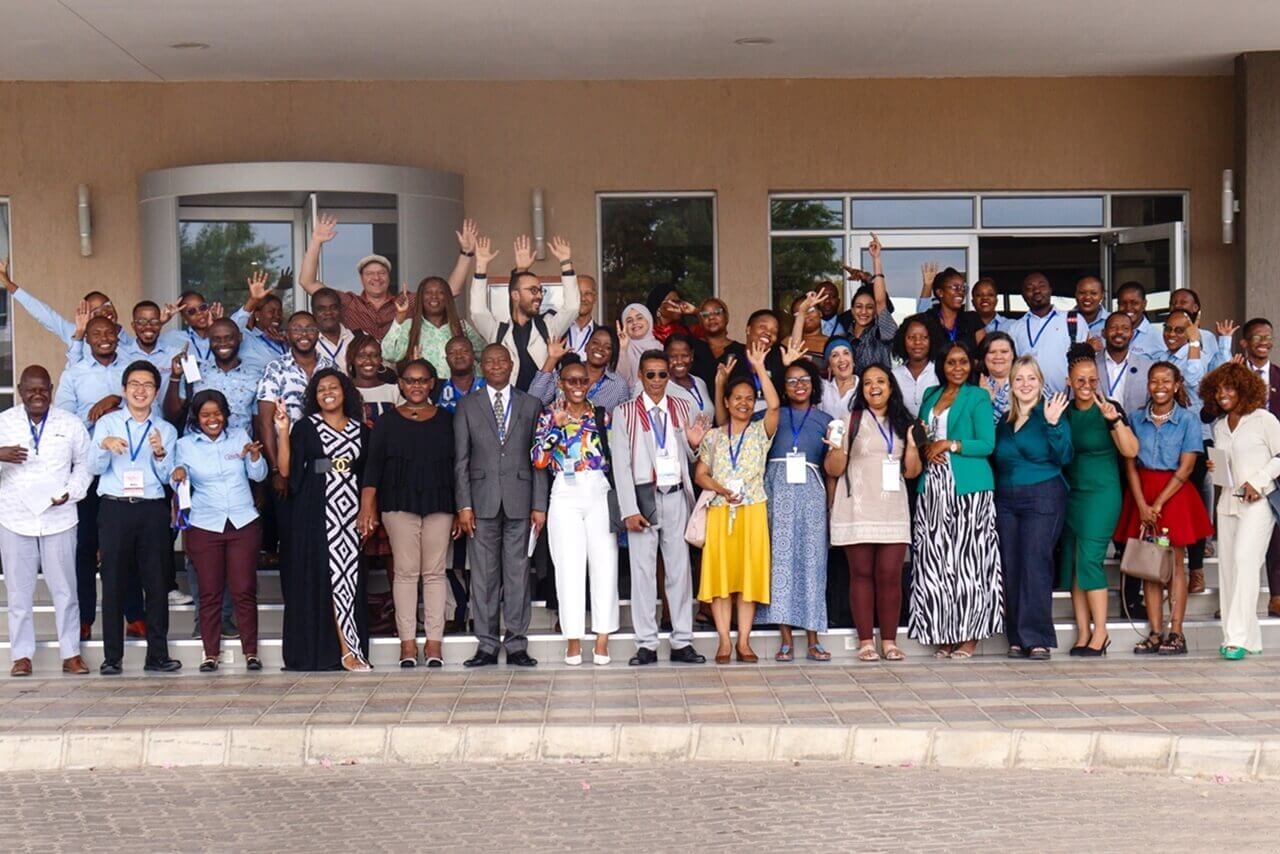
As part of our efforts to continuously improve Aselo for our helpline partners, our team interacts with Child Helpline International (CHI) members and crisis helplines around the world every day. Late last year we had the opportunity to connect with a diverse group of child advocates at Child Helpline International’s Middle East and North Africa regional conference.
Hosted in Gaborone by Childline Botswana, delegates included helpline representatives from more than 14 countries, representing partners ranging from the Botswana government, development partners, other government representatives, organizations working towards reducing harms in the region, children’s voices representatives from SADC countries, and the African Union.
Throughout the conference, there was a clear emphasis on building cross-sector collaborations to keep children safe, and to hear directly from children regarding how helplines can make it easier for them to connect with the help they need.
Panel Discussions on major harms facing children in the region
Conference panel discussions focused on three significant harms that are prevalent in the region:
- early forced child marriage;
- female genital mutilation; and
- online child sexual exploitation and abuse.
Panel members shared that combating child marriage and genital mutilation, which are often based on long-standing cultural traditions and religious beliefs, requires coordinated preventative and educational approaches across government, law enforcement, helplines, and other NGOs, with the support of healthcare professionals, social workers, and others.
In terms of combating online child sexual exploitation/ abuse, the challenge that many helplines and law enforcement agents face is not knowing what action they can take, since the social media platforms where the content is shared store content data outside of the national jurisdiction. In addition, law enforcement officials struggle to enforce action to remove reported material that is hosted on servers outside their jurisdiction.
Two helplines, Childline Zambia and YONECO Malawi, shared that Aselo’s integration with the Internet Watch Foundation reporting portal has made it easier for them to take down websites and/or web pages containing Child Sexual Abuse Material (CSAM).
In addition, there is an ongoing need for governmental and public pressure on social media companies to remove and prevent sharing of illicit content.
Helpline challenges and insights from children
Helpline leaders discussed the ongoing challenges they face, including counselor burnout and high turnover, and difficulty in obtaining adequate funding for operational expenses. In addition, while produced a wealth of data, that data isn’t easily accessible to helplines, governments and other partners who could use the information to better direct efforts and resources in combating some of the region-specific harms, especially in rural areas.
Another challenge is a lack of awareness of the toll-free 116 number that connects to child helplines and lack of understanding about what toll-free support means. At the conference, a group of over 20 children representing the youth of Botswana shared their recommendations for raising awareness about helpline services and the 116 toll-free number, including public education campaigns, particularly in rural areas, through the use of billboards and posters, engaging different stakeholders (church, schools, families, sporting events), and organizing visits to helplines.
Two highlights of the conference: we toured the Broadhurst Child Friendly Police Station in Gaborone. As one of the first spaces dedicated to making legal protection accessible to children, the law enforcement team at Broadhurst created a colorful, child-focused space separate from but adjacent to the police station. Officers have made considerable efforts to ensure children feel safe, including not wearing police uniforms to avoid intimidation; setting up a virtual interview space so that interviews with children can be broadcast to courtrooms, thus avoiding the need for child victims to be retraumatized in court; and providing rooms for temporary shelter when needed.
We also toured the offices of Childline Botswana, where Childline Botswana representatives explained counsellor workflows, showed us their on-site shelter, and shared their innovative income stream from a maize field located on the property.
At the end of the conference, representatives from CHI and the regional helplines developed the Gaborone Declaration, underscoring child helplines’ commitment to strengthening their capacity to excel in protecting the children of Africa. The declaration also outlines suggestions to the UN Committee on the Rights of the Child; urges the African Union to formalize their collaboration with child protection agencies; calls on governments to strengthen their legal policies and capacity to protect children; and calls on the technology/telecommunication sector to implement technical frameworks for children’s safety.
Tech Matters’ focus on building Aselo as an open source, customizable platform to support children in crisis has always inspired me and the Aselo team. Understanding the different and shared challenges across regions through conferences like this helps us identify ways for Aselo to continuously improve to strengthen the global helpline movement.









0 Comments